Look inside any well-made jacket, suit, or protective workwear. Between the outer shell and the inner lining, there is often a hidden layer of fabric that gives the garment its shape, structure, and durability.
That hidden layer is called interlining — and more and more garment manufacturers are making it from polypropylene spunbond nonwoven fabric.
In this article, we'll explore why PP spunbond is the material of choice for garment interlining and protective apparel linings — and how to choose the right specification.
What Is Garment Interlining?
Interlining (also called interfacing) is a layer of fabric placed between the outer shell and the inner lining of a garment. It provides:
- Structure and shape — keeps collars, cuffs, and lapels crisp
- Reinforcement — prevents stretching and distortion
- Body and weight — adds substance to lightweight fabrics
- Warmth — adds a thin insulation layer
- Smoothness — hides seams and stitching from the outside
Why PP Spunbond for Interlining?
PropertyBenefit
| Lightweight |
Adds structure without adding bulk or weight |
| Soft and flexible |
Drapes well — doesn't make the garment feel stiff |
| Strong and tear-resistant |
Reinforces seams and stress points |
| Lint-free |
No loose fibers — clean garment interior |
| Breathable |
Allows air circulation — comfortable to wear |
| Hydrophobic |
Repels moisture — no dampness or mold |
| Easy to cut and sew |
Clean edges — no fraying during production |
| Cost-effective |
Lower cost than woven or knitted interlinings |
Key Interlining and Lining Applications
1. Fusible Interlining (Heat-Bonded)
Spunbond fabric is coated with a heat-activated adhesive (usually dots of polyamide or EVA). When pressed with a hot iron, the adhesive melts and bonds the interlining to the garment fabric.
- Applications: Collars, cuffs, lapels, plackets, waistbands
- Typical spec: 30–60gsm, white or black
2. Sew-In Interlining (Non-Fusible)
For fabrics that cannot be heat-pressed (leather, some synthetics, delicate fabrics), spunbond interlining is sewn in place.
- Applications: Leather garments, evening wear, tailored jackets
- Typical spec: 40–70gsm, white or natural
3. Protective Apparel Linings
For workwear, protective clothing, and uniforms, spunbond is used as an inner lining. It adds comfort, protects the outer shell from body oils, and provides a clean finished interior.
- Applications: Coveralls, work jackets, safety vests, lab coats
- Typical spec: 40–80gsm, white or black
4. Bag and Luggage Linings
Spunbond is widely used as an inner lining for handbags, backpacks, and luggage. It provides body and structure while being lightweight.
- Applications: Handbags, backpacks, suitcases, cosmetic bags
- Typical spec: 60–100gsm, black, white, or custom colors
5. Shoe and Footwear Linings
For shoe uppers and linings, spunbond provides a lightweight, breathable, and durable inner layer.
- Applications: Shoe lining, insole backing, boot lining
- Typical spec: 40–80gsm, white or natural
6. Furniture and Mattress Ticking Backing
In upholstered furniture, spunbond is used as a backing layer for decorative fabrics and as a lining for mattress ticking.
- Applications: Sofa backing, mattress lining, cushion backing
- Typical spec: 60–100gsm, white or black
PP Spunbond vs. Other Interlining Materials
PropertyPP SpunbondWoven CottonKnitted PolyesterNonwoven (Chemical Bond)
| Cost |
✓ Low |
High |
Medium |
✓ Low |
| Softness |
Good |
✓ Excellent |
✓ Excellent |
Moderate |
| Strength |
✓ High |
Moderate |
Moderate |
Low |
| Lint-free |
✓ Yes |
✗ No |
No |
Yes |
| Hydrophobic |
✓ Yes |
No (absorbs) |
Moderate |
Moderate |
| Recyclability |
✓ Yes (PP) |
✓ Yes |
✓ Yes |
Limited |
PP spunbond offers the best balance of cost, strength, lightweight feel, and lint-free performance for most interlining and lining applications.
Recommended Specifications
ApplicationRecommended GSMColorNotes
| Fusible interlining |
30–60 |
White / Black |
Adhesive coating applied by converter |
| Sew-in interlining |
40–70 |
White / Natural |
Soft, flexible, easy to sew |
| Protective apparel lining |
40–80 |
White / Black |
Breathable, comfortable |
| Bag / luggage lining |
60–100 |
Black / Colors |
Strong, printable |
| Shoe lining |
40–80 |
White / Natural |
Breathable, durable |
| Furniture / mattress backing |
60–100 |
White / Black |
Durable, lint-free |
What We Offer for Garment Interlining
At Heng Hua Nonwoven, we supply single-layer PP spunbond for garment interlining and protective apparel linings:
- Basis weight: 30–100gsm (covering all interlining and lining applications)
- Width: Customizable up to 2.4m
- Color: White, black, natural — or custom colors
- Surface: Smooth, consistent, and easy to cut
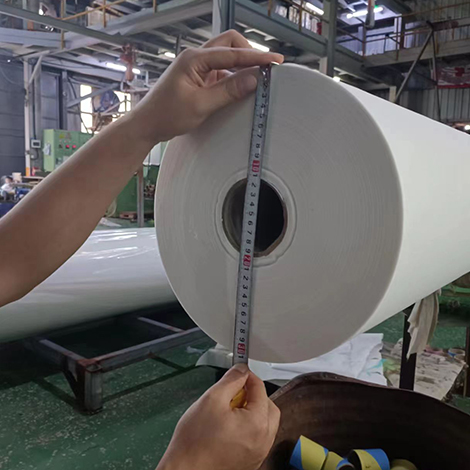
- Core size: 3-inch standard; 2-inch and 1.5-inch available via rewinding for suitable GSM and width
- Quality: ISO 9001:2015 certified; SVHC tested
Key features for interlining and linings:
- Lint-free — clean garment interior
- Hydrophobic — repels moisture, prevents mold
- Soft and flexible — drapes well, doesn't feel stiff
- Strong and tear-resistant — reinforces seams and stress points
- Consistent quality — stable GSM and width
- Customizable — colors, widths, and core sizes
The Bottom Line
Garment interlining and protective apparel linings are essential for well-made clothing. PP spunbond nonwoven delivers the lightweight structure, softness, strength, and moisture resistance that garment manufacturers need.
From suit collars to workwear linings, from handbags to footwear, PP spunbond is there — hidden inside, holding things together.
Looking for a reliable supplier of PP spunbond nonwoven for garment interlining? We offer 30–100gsm grades with custom colors, widths, and core sizes — all ISO 9001:2015 certified.
Contact us for samples or a quote – Let's help you make better garments.
marketing@henghuanonwoven.com